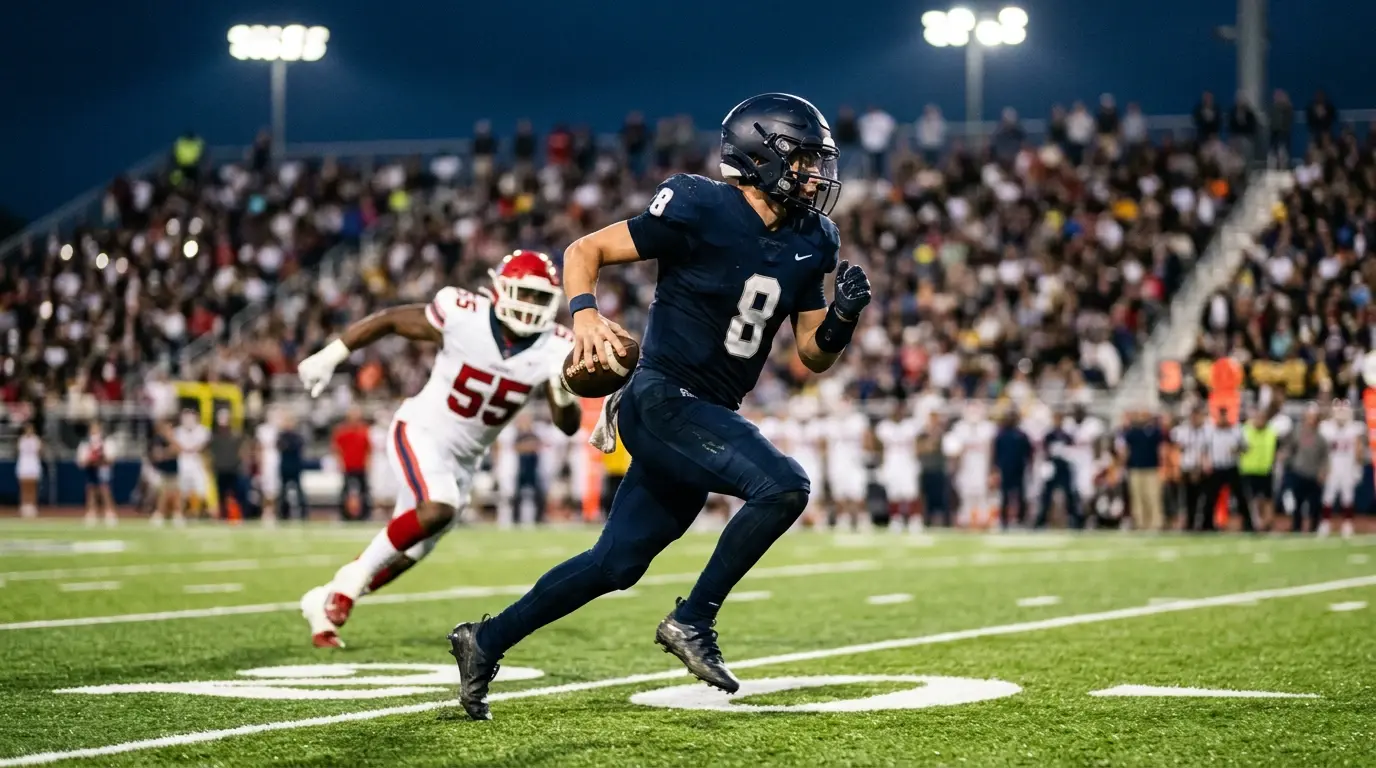
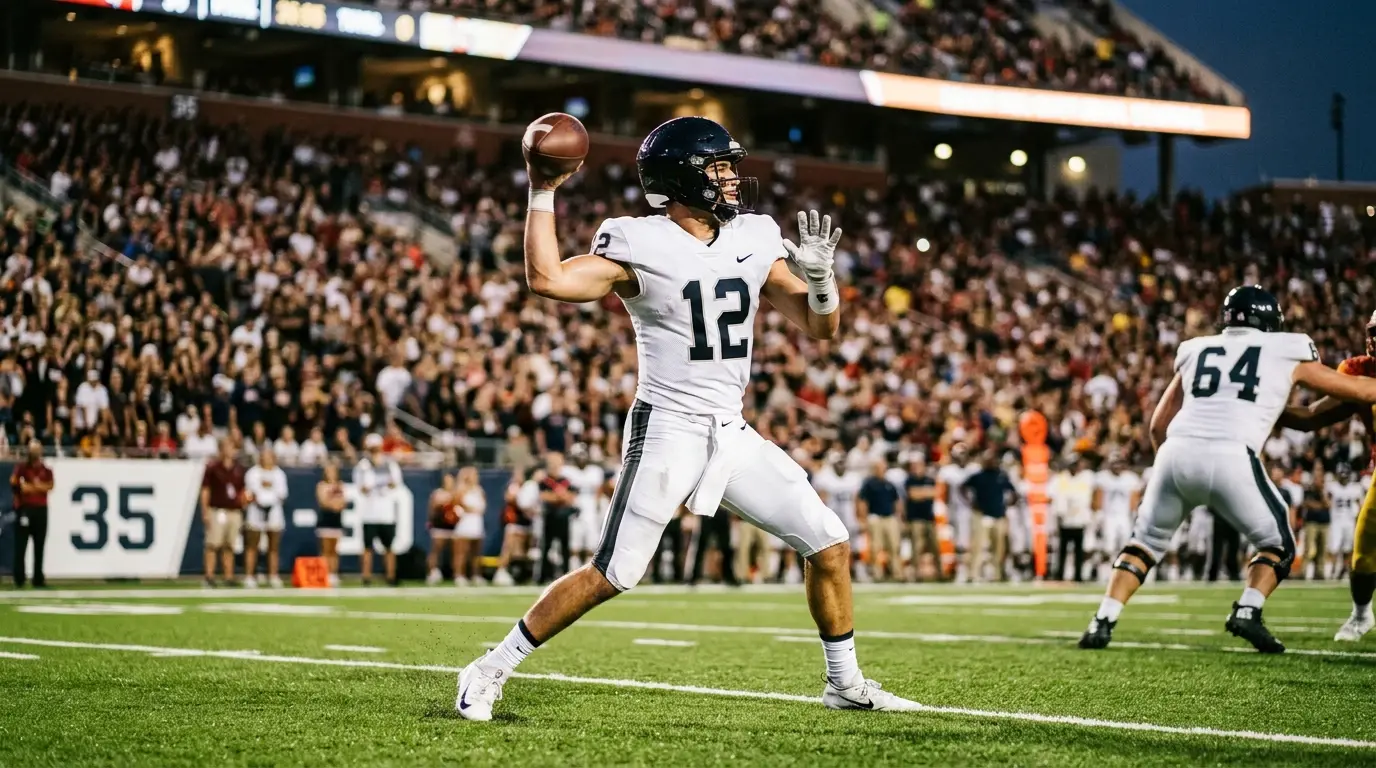
The MVP award is the one annual NFL market where I have lost more sleep over voter psychology than over on-field performance. I have priced this thing every season for almost a decade, and the trader’s secret nobody tells you is that the most useful piece of information you can hold is not a quarterback rating chart — it is a working theory of how the 50 people with ballots actually behave. Quarterbacks have won 13 MVPs in a row, and 23 of the last 26, which tells you the voter pool has an entrenched bias the market has long since priced in. What it has not priced in is the way that bias bends when the season story bends.
This piece is for the UK punter who already knows the MVP futures board exists and wants to read it the way the bookmaker reads it. The award is not decided by stats alone, and the people who fill in the ballot are not robots. Understanding how they think is where the value lives.
NFL MVP Voting Weighting: Analyzing the 50-Voter Ballot Rules
Picture 50 sportswriters sitting at home in early January, each with a ballot that asks them to rank five MVP candidates from first to fifth. Most British punters assume MVP is decided by a single vote per writer, winner-takes-all. That is not how it works. The Associated Press operates a points system: a first-place vote is worth ten points, second is worth five, third worth three, fourth worth two, fifth worth one. The total points across all 50 ballots determines the winner.
That structure matters enormously for futures pricing. A candidate who collects 35 first-place votes and zero down-ballot support can lose to a candidate who collects 20 firsts and a stack of seconds and thirds. The voter who puts a defender first and a quarterback fifth contributes meaningfully to the QB’s total even while signalling preference for the defender. This is why “consensus second-best” candidates with name recognition occasionally outperform their first-place vote count on the final tally, and why pure narrative spikes in November sometimes fail to translate into the trophy.
Treat the ballot as a weighted accumulator and you start to see why the runner-up price on a UK MVP board is often a better value bet than the favourite at 4-to-5. The favourite needs the first-place votes; the runner-up only needs enough down-ballot support to prevent the favourite from running away with the points total.
How the voter pool has changed since the 2010s
When I started pricing this award, the AP voter pool was dominated by long-tenured beat writers who had covered the league for decades and who tended to reward statistical milestones and team success above novelty. The pool has gradually shifted — younger voters, more national columnists, fewer pure beat reporters — and the kinds of stats that move ballots have shifted with them.
Passing yards still matter, but yards per attempt and expected points added have crept into voter vocabulary. Rushing yards by a quarterback are now treated as a legitimate MVP-driving statistic rather than a curiosity. The 11-win team rule, which says no recent MVP has come from a team with fewer than 11 regular-season wins, is partly a function of how this newer voter cohort thinks about team context. They want a player whose excellence cannot be detached from a winning record, because they have watched too many empty-stat MVPs in the 2000s and want to avoid that mistake.
The practical betting implication is that the voter pool has become slightly more analytical and slightly more narrative-driven at the same time, which sounds like a contradiction but is not. They reward modern stats, but they also reward the story those stats fit into. A quarterback putting up a 70 expected-points-added season on a 7-10 team will get less love than a quarterback at 50 EPA on a 13-4 team, because the second one has a story attached.
Narrative bias and the late-November pivot
If you have ever wondered why MVP futures prices move so violently in mid to late November, this is your answer. The narrative pivot — the moment when one or two candidates become “the story” of the season — typically happens between week 10 and week 13. Before that pivot, the market is roughly responsive to weekly performance. After it, the market becomes a feedback loop: media coverage pushes one candidate, voters absorb the coverage, betting markets follow the voters’ assumed direction, and the price compresses.
I have a working rule that any MVP candidate whose price contracts by more than 50 per cent in a single week after week 9, without a major statistical anomaly to justify it, is being narrative-pumped rather than fundamentally repriced. That is not necessarily a fade signal — sometimes the narrative is correct — but it should make you nervous about chasing the new favourite at the contracted price. The better play is usually to identify which candidate is being narrative-suppressed, the second-tier name whose performance is being underweighted because they do not fit the chosen story, and to take a position on them at the inflated price.
The November pivot is also when UK and US bookmaker pricing tends to diverge most sharply. American books tend to react faster to narrative shifts because they take more recreational action; UK books often hold a more stable line because their professional volume is heavier. That divergence creates short-term arbitrage windows and slow-moving value spots.
Three voter-based angles UK punters can exploit
The first angle is the “down-ballot quarterback” trade. Identify a quarterback who is not the favourite but who plays on a top-five offence and is durable enough to survive the season. That player will collect second and third place votes from voters whose first-place pick gets injured or fades in December. If they enter December with a healthy team record, their futures price is almost always too long.
The second angle is the “anti-runaway” hedge. When the MVP favourite contracts below evens during October and stays there into November, look for the candidate sitting at 10-to-1 or longer whose late-season schedule includes two or three of the worst defences in the league. That player has the easiest path to a December surge, and a December surge is the single most ballot-moving event in the calendar.
The third angle is the running back or defender longshot in a year where every quarterback contender has a flaw. I do not play this often — quarterbacks have won 13 MVPs running — but in seasons where the top three QBs have all dealt with injury or inconsistency by week 8, the longshot non-QB price is genuinely undervalued. Chris Randall at William Hill said back in 2022 that NFL futures attract more interest in the UK than the matchup quality justifies, which means UK longshot pricing is often inflated by recreational action and the value sits with the patient punter who waits for the right structural year. For a deeper dive on how rushing-quarterback profiles reshape the same board, the piece on quarterback rushing stats and MVP futures picks up the thread.
Reading the ballot before the bookmaker does
I have priced more MVP boards than I can count, and the same mistake catches new punters every season: they treat the futures market as a referendum on who is playing the best football. It is not. It is a referendum on how 50 sportswriters will rank five candidates in early January, weighted by a points system that rewards consensus over peak. Once you internalise that, every other piece of MVP analysis falls into place. Watch the down-ballot support, fade the narrative pumps, respect the 11-win filter, and remember that the candidate who tells the best story between week 10 and week 13 usually wins. The market gets there eventually. The patient British punter gets there first.