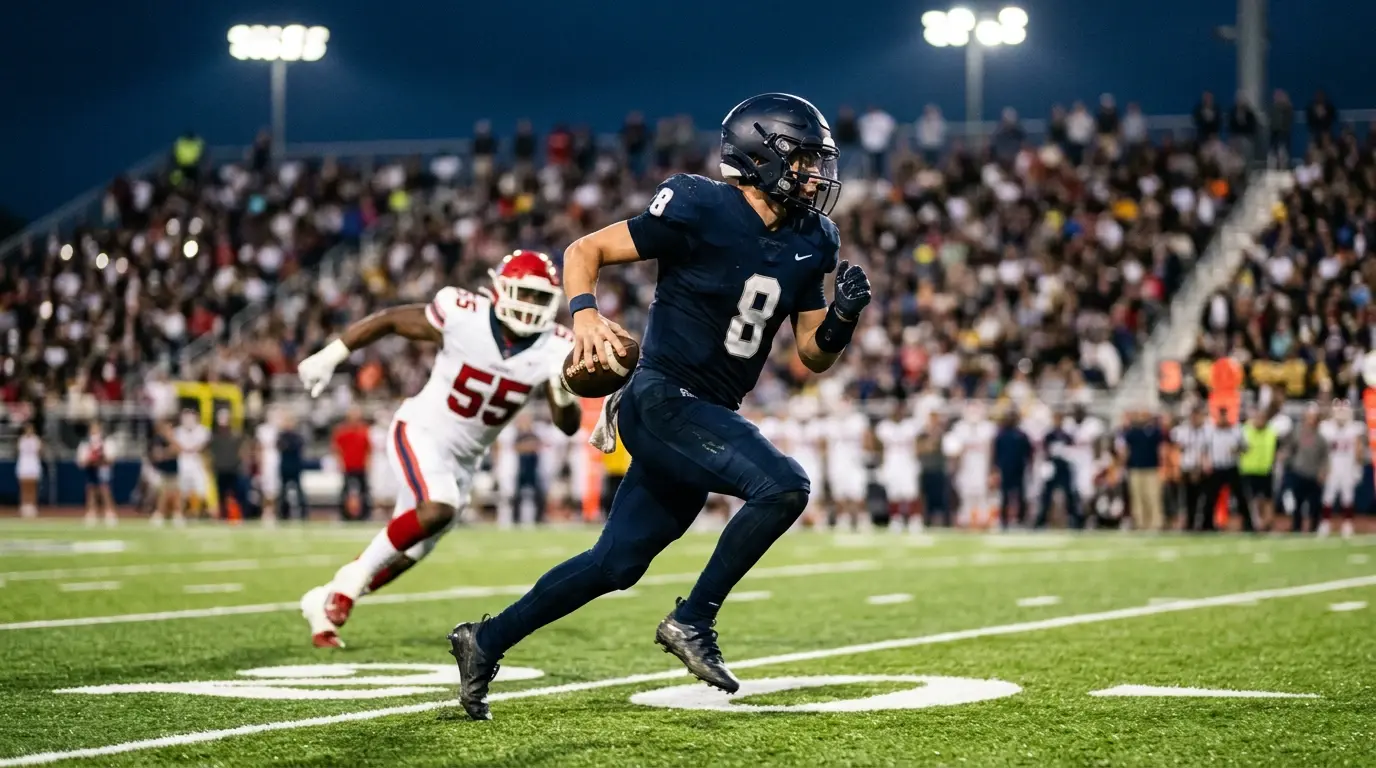
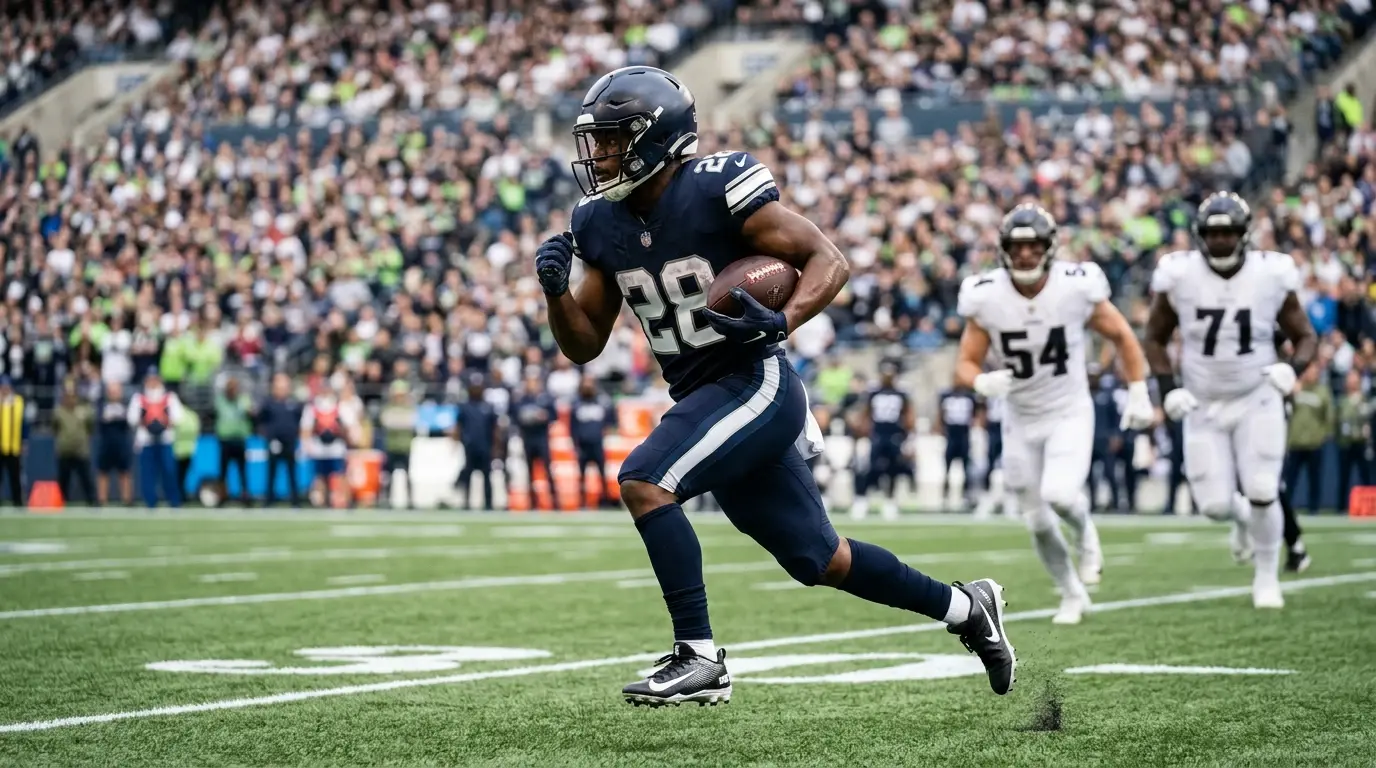
The first time I priced the OROY market on my own, I made a textbook beginner’s error and weighted the running backs too heavily because they had three of the last five winners at the time. The next season, a rookie quarterback drafted at number three overall took the award and three of the five running backs I had over-priced finished outside the top ten in voting. The lesson stuck. OROY pricing is a board with structural patterns that look stronger than they actually are, and the punter who treats those patterns as iron rules gets punished. UK punters who want to stake this market need to understand both what the historic patterns say and where they break down.
Offensive Rookie of the Year is the smaller, quieter cousin of the MVP award, but it is one of the most actively-staked individual-award markets in the NFL futures calendar. UK books offer it from the moment the NFL Draft concludes in late April, and the price board evolves through training camp, preseason, and the first six weeks of the regular season before stabilising into the late-season favourite tier.
25 Years of Offensive Rookie of the Year Winners by Position
Run the OROY winners list for the last 25 years and the position breakdown is more even than most UK punters assume. Quarterbacks have won roughly 40 per cent of the awards. Running backs have won roughly 35 per cent. Wide receivers have won roughly 20 per cent. Tight ends and offensive linemen account for the remaining handful. The pattern is not random — it tracks the changing nature of NFL offensive systems over the last quarter century — but it is not stable enough to be a rigid pricing input.
The 2010s were the running back decade, with rookies like Saquon Barkley, Ezekiel Elliott, and Alvin Kamara taking the award. The early 2020s have tilted back toward quarterbacks as elite first-round signal-callers have entered the league ready to start and produce immediately. The 2025 award reflected that quarterback shift. The pattern matters for UK punters because the futures market typically anchors to recent results when pricing the next season, which means in years following a quarterback-heavy stretch, the running back longshots are slightly underpriced, and in years following a running back stretch, the quarterback longshots are.
The structural quirk worth knowing is that voters reward rookies who play meaningful snaps on a competitive team. A statistically dominant rookie running back on a 4-13 team will lose to a less statistically impressive rookie quarterback on a 10-7 team almost every time. That winning-team filter compresses the realistic field to rookies on teams with at least a marginal playoff path, which is roughly half the league in any given season.
Why first-round picks dominate the OROY board
The dominant predictor of OROY votes is draft capital. Roughly 80 per cent of the last 25 OROY winners were first-round picks, and the remainder were second-rounders who landed in unusually favourable team situations. The reason is straightforward: first-round picks earn immediate starting roles, accumulate snap counts and statistics from week one, and benefit from the institutional commitment their team has made to playing them.
Second-round picks who win OROY almost always replace an injured starter early in the season and seize the role rather than waiting their turn. Third-round and later picks have essentially never won the award. The structural implication for UK punters is that the OROY futures board’s longshot end — the rookies priced at 50-to-1 or longer — is almost always poor value. Those long-priced rookies are typically third-round skill-position players whose path to the award requires multiple injuries on their team and a rapid emergence into a starting role, which happens too rarely to justify the headline prices.
The corollary is that the favourite end of the OROY board is structurally honest. A first-round pick with a clear path to immediate starting snaps, priced at 4-to-1 or 5-to-1, is roughly fairly priced relative to their historic win probability. The market does not offer dramatic value at the favourite end, but it does not punish punters who take favourite positions either. The genuine value lives in the second tier — first-round picks priced between 8-to-1 and 15-to-1 who have realistic paths to starting roles but who the market has not yet priced as favourites.
Quarterback versus skill-position OROY pricing
Quarterback OROY candidates carry a built-in structural advantage that UK punters should price into their decisions. A starting rookie quarterback accumulates passing yardage and touchdown statistics at volumes that running backs and receivers cannot match on a per-game basis, and the voter pool rewards the position with disproportionate attention. A rookie quarterback who plays 16 games at adequate-but-unspectacular efficiency will often outvote a rookie running back who plays 16 games at elite efficiency, simply because the quarterback’s role is more visible and the position’s perceived importance is higher.
The trader implication is that quarterback OROY favourites tend to be slightly overpriced because the market has internalised this positional advantage, while running back and wide receiver OROY candidates are slightly underpriced when they have clear paths to starting roles on competitive teams. The cleanest value in recent years has come from rookie wide receivers paired with elite quarterbacks, who accumulate counting statistics rapidly and benefit from the voter narrative about offensive-system fit.
The rookie quarterback question intersects with the broader MVP-level analysis I covered in my piece on quarterback rushing stats and the modern NFL MVP futures board, because the same dual-threat factors that drive MVP voting are increasingly visible in OROY voting as well.
Staking OROY: preseason versus midseason entry
The preseason OROY market opens immediately after the NFL Draft concludes in late April, which gives UK punters more than four months of futures pricing before the regular season starts. That extended window is unusually long for a single-season award market, and it creates both opportunity and risk.
The opportunity is that early preseason OROY prices on first-round picks are typically wider than they will be by August. A rookie quarterback drafted to a team where his starting role is clear may open at 8-to-1 in May and compress to 5-to-1 by training camp once the depth chart is confirmed. The May to July window is therefore the cleanest entry point for backers who have confidence in a particular rookie’s path to starting snaps.
The risk is that the draft-to-training-camp window is also the period of greatest informational uncertainty. Rookie quarterback positional battles can resolve unexpectedly, rookie wide receivers can lose snaps to surprise veterans, and rookie running backs can lose their starting roles to free-agent signings. Those uncertainties mean that the May to July prices, while typically wider than later prices, also reflect genuine probability that the rookie’s role does not materialise as expected.
Midseason entry — staking after the first six weeks of the regular season — produces cleaner probability assessments because rookie snap counts and statistics are now visible. The trade-off is that prices have contracted significantly, particularly on the rookies who have emerged as front-runners. The disciplined approach is to stake preseason positions on first-round picks with clear paths, then to layer additional positions in October if the market has under-priced a particular rookie’s strong start.
The disciplined OROY punter’s checklist
OROY is one of the rare NFL futures markets where the structural patterns are stable enough to support a clear pre-bet checklist. First, is the rookie a first-round pick on a team with a clear starting role? If no, the longest acceptable price is roughly 30-to-1 and the structural odds are against you. Second, does the team project to at least eight wins? If no, the winning-team filter will hurt the rookie’s voting case regardless of statistical production. Third, is the rookie priced in the second tier — between 8-to-1 and 15-to-1 — or already in the favourite tier? Second tier offers genuine value when the structural case is strong; favourite tier is roughly fair priced and rarely produces outperformance. Fourth, has the market priced the position correctly given recent history? In years following running back stretches, give modest extra weight to quarterback candidates and vice versa. Pass on rookies who fail any of these filters, regardless of how attractive the headline price looks.